
Living Our Spiritual Values: Spiritual Education and Universities Transforming the World
by:
Dr. Kamran Mofid
when:
Sunday, September 23, 2012 - 10:45 to 12:00
|
Where is the life we have lost in living? Where is the wisdom we have lost in knowledge? Where is the knowledge we have lost in information? ~~T.S. Eliot |
This paper is an attempt to highlight and to elaborate the power of spiritual education in universities in general, and in business education and business schools in particular in transforming our world.
Education is the foundation for a good and fulfilling life, setting the individual on a path of personal fulfilment, economic security and societal contribution. Today the world of knowledge and competence is in a constant state of flux. The same can be said for the universe of visions, aspirations, and dreams. For many centuries it had been considered that education in general and universities in particular were responsible for the moral and social development of students and for bringing together diverse groups for the common good. Is this still the case?
For me, the key that unlocks the door to building of a better world is EDUCATION. But, not any education and surely not the education mostly on offer currently, but a truly different form of education, an education grounded in values and delivered by those who know that it is a great honour and privilege to be a teacher as well as knowing that teaching above any thing else is a vocation.
Education is too important a field to be left to the adversarial politics of competing model-builders: all such models are limited and conditioned human constructions. A correct education system must be based on a metaphysics derived from a comprehensive and unifying vision rooted in philosophy, ethics and spirituality.
There is an underlying unity between all branches of education and all aspects of learning and this unity needs to be reflected in an integrated, holistic and multi-disciplinary curriculum which does not draw artificial lines between different disciplines. Much of modern education is still based on a machine-age model of separate subject areas which encourages a fragmented view of learning. In the absence of a unifying spiritual perspective, inevitably little more than lip-service is paid to the need for cross-curricular links.
We should all understand that, in days of spiritual hunger, education needs to do more than grope in the dark. It needs to point students to the light of the world.
What is the main role and function of a "good" education? To equip students with marketable skills to help countries compete in a global, information-based workplace? Has this overwhelmed other historically important purposes of education, and thus, short- changing us all and in particular the students?
If there is a shared national purpose for education, should it be oriented only toward enhancing the narrow vision of a country's economic success? Should education be answerable only to a narrowly defined economic bottom line, or do we need to discover a more comprehensive, inclusive bottom line, given the catastrophic crises that we are witnessing all around us? Are the interests of the individuals and selective groups overwhelming the common good that the education system is meant to support? Should our cherished educational values be all up for sale to the highest bidder? Should private sector management become the model for our mainly publicly-funded education system? Should the language and terminology of for profit- only business model, such as “downsizing”, “outsourcing”, “restructuring”, ”marketisation”, “privatisation” and “deregulating”, amongst others, be allowed to become the values of education, when teaching and learning is nothing short of a vocation and sacrament?
The topic which I wish to address here is vast; all I can reasonably hope to do is paint a picture with very broad brushstrokes. I wish to argue that the marketplace is not just an economic sphere, ‘it is a region of the human spirit’. Many economic and business decisions impact on the environment, as it is now being more widely recognised, but they also raise important moral questions which call into question what it is to be a human being. I will argue that decision-makers (contrary to what is practised today) need also to concern themselves with the world of the heart and spirit.
Although self-interest is an important source of human motivation, driving the decisions we make in the marketplace every day, those decisions nevertheless have a moral, ethical and spiritual dimension, because each decision we make affects not only ourselves but others too. I firmly believe that these values must also be at the heart of our education system, our universities and the business schools.
It is my hope that with this personal and professional reflection, I can begin an open dialogue with all concerned colleagues, friends, students and others, so that together we can consider a working solution. As the current global crises have clearly shown, the whole world is waking up to the value of co-creation and the harnessing of knowledge from diverse sources, disciplines, experience and expertise. It is time to be contemplative and take action for social justice, for which a sustainable education for the common good is an essential part.
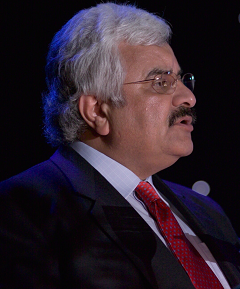
Dr. Kamran Mofid is Adjunct Professor at Dalhousie School of Business, Dalhousie University, Canada, Founder of the Globalisation for the Common Good Initiative (founded at an international conference in Oxford in 2002) and Co- founder/Editor, Journal of Globalisation for the Common Good, hosted at Purdue University, USA, member of the International Coordinating Committee (ICC) of the World Public Forum, Dialogue of Civilisations, Moscow and Vienna, and Founding Member, World Dignity University, and Global Advisory Board, Human Dignity and Humiliation Studies, Norway. Mofid received his BA and MA in economics from the University of Windsor, Canada in 1980 and 1982 respectively. In 1986 he was awarded his doctorate in economics from the University of Birmingham, UK. In 2001 he received a Certificate in Education in Pastoral Studies at Plater College, Oxford. From 1980 to 2000 he was Economic Teaching Assistant, Tutor, Lecturer and Senior Lecturer at Universities of Windsor (Canada), Birmingham, Bristol, Wolverhampton, and Coventry (UK). Mofid's work is highly interdisciplinary, drawing on Economics, Business, Politics, International Relations, Theology, Culture, Ecology, Ethics and Spirituality. Mofid's writings have appeared in leading scholarly journals, popular magazines and newspapers. His books include Development Planning in Iran: From Monarchy to Islamic Republic, The Economic Consequences of the Gulf war, Globalisation for the Common Good, Business Ethics, Corporate Social Responsibility and Globalisation for the Common Good , Promoting the Common Good (with Rev. Dr. Marcus Braybrooke, 2005), and A non-Violent Path to Conflict Resolution and Peace Building (Co-authored, 2008).