
An Uncultivated Life is not Worth Living
by:
Dr. Peimin Ni
when:
Saturday, September 27, 2014 - 13:30 to 14:30
held at:
Lyle S. Hallman Faculty of Social Work Wilfrid Laurier University 120 Duke Street West Kitchener, Ontario N2H 3W8
Socrates famously claims that “an unexamined life is not worth living” and that we should "let no day pass without examining yourself." Confucius has a similar teaching, but he puts more emphasis on cultivating the person than on obtaining objective knowledge. The dimension of cultivation is characterized by later Confucians as gongfu (kung fu)—not narrowly understood as martial arts, but broadly as efforts for developing, embodying, and manifesting moral and spiritual virtuosities. While the Socratic life aims at increasing intellectual awareness, the Confucian life puts more emphasis on becoming loving and caring, because the human heart more than the mind defines who we are. These different orientations may be accountable for the very different directions that the two respective cultures, Chinese and Western, have subsequently developed. In this presentation, I will try to explain the Confucian view of what it means to be, or rather to become, a human being, and how this view affected the characteristics of the traditional Chinese view of education.
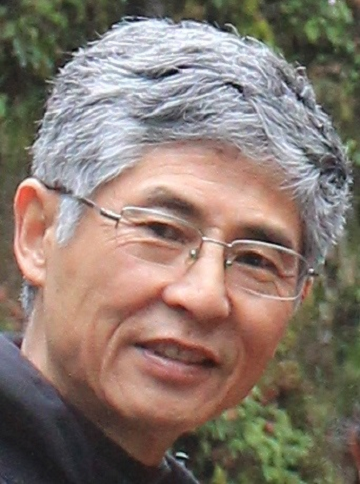
Peimin Ni 倪培民 is Professor of Philosophy at Grand Valley State University in Michigan, USA. He received his B.A. and M.A. from Fudan University, China and Ph.D. from the University of Connecticut, USA. He has taught at the University of Hawaii and the University of Hong Kong as a Visiting Professor, served as the President of the Association of Chinese Philosophers in America, President of the Society of Asian and Comparative Philosophy, Editor-in-Chief of the ACPA book series on Chinese and Comparative Philosophy, and was invited to be a plenary speaker at World Public Forum “Dialogue of Civilizations” numerous times. Ni has authored several books, including On Confucius (2002), Confucius—Making the Way Great (2010), and numerous journal articles, book chapters, and some articles in New York Times, mostly on comparative studies of classic Confucianism and Western philosophy. He is also an accomplished Chinese calligraphy artist. His calligraphy is featured on the cover of several academic journals and books, including Dao: a Journal of Comparative Philosophy.